


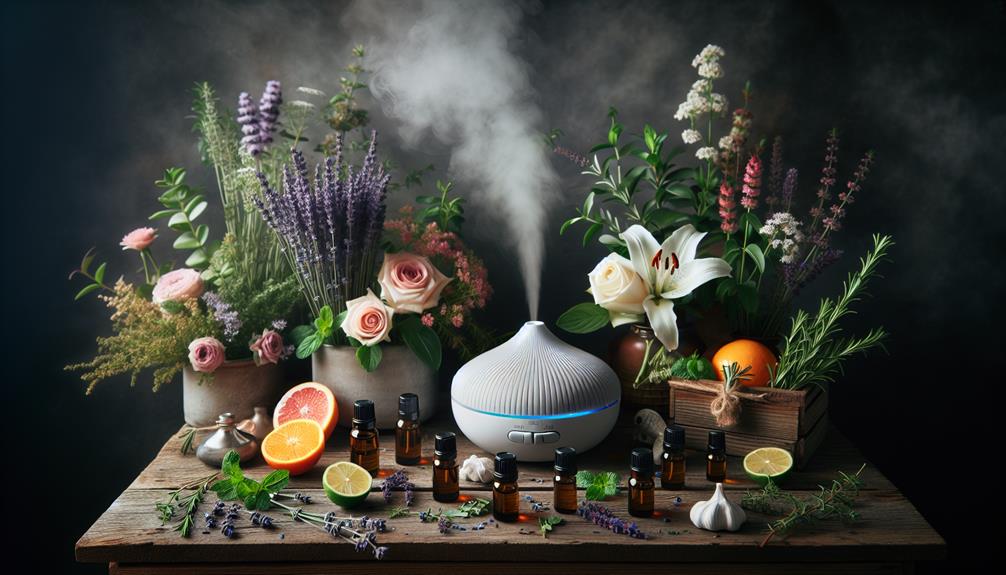
When you're journeying through the challenging path of alcohol recovery, essential oils can be a beneficial companion. Lavender oil is well-known for its calming effects, helping to ease anxiety and stress. Peppermint oil tackles nausea and enhances mental clarity, while rosemary oil boosts cognitive function and eases anxiety. Lemon oil uplifts your mood and supports detoxification, and frankincense oil provides grounding and emotional stability. But how exactly do these oils work, and what makes them particularly effective in this journey? Let's explore each one in detail and understand their unique benefits.
Lavender Oil
Lavender oil, renowned for its calming properties, can play a significant role in alleviating anxiety and stress during alcohol recovery. When you're maneuvering through the challenging path of overcoming alcohol dependence, managing emotional turbulence is essential. Lavender oil's anxiolytic effects can help stabilize your mood and promote relaxation, making it easier to cope with withdrawal symptoms.
Incorporating lavender oil into your routine doesn't have to be complicated. You can diffuse it in your living space to create a serene environment, or apply a few drops to your pillow before bed to enhance sleep quality. Its sedative properties can reduce insomnia, a common issue during recovery.
Topical application is another effective method. Dilute lavender oil with a carrier oil, like jojoba or almond oil, and massage it into your temples or wrists. This can provide immediate relief from stress and tension, promoting a sense of calm.
Additionally, lavender oil can be used in aromatherapy baths. Adding a few drops to your bathwater can create a soothing experience that eases both your mind and body.
Peppermint Oil
Incorporating peppermint oil into your alcohol recovery regimen can effectively alleviate nausea and improve mental clarity. Peppermint oil's menthol content provides a cooling sensation, which can counteract the queasiness often associated with alcohol withdrawal.
To use it, you can inhale the oil directly from the bottle or add a few drops to a diffuser. Inhalation can stimulate the olfactory system, sending calming signals to the brain and reducing the urge to vomit.
Moreover, peppermint oil enhances cognitive function. Studies indicate that menthol can improve concentration, focus, and overall mental performance. This is particularly beneficial during recovery when mental fog can be a significant barrier.
Applying a diluted solution of peppermint oil to your temples or wrists can offer quick relief and mental invigoration.
Additionally, peppermint oil possesses analgesic properties, which can help alleviate headaches often experienced during detoxification. A gentle massage of diluted peppermint oil on the forehead can provide immediate relief. Always make sure to properly dilute to avoid skin irritation.
Rosemary Oil
Rosemary oil offers a multifaceted approach to alcohol recovery by enhancing cognitive function, reducing anxiety, and promoting emotional resilience. Utilizing this essential oil can provide a holistic boost to your recovery journey. Its primary component, 1,8-cineole, is known for its neuroprotective properties, which can greatly improve your mental clarity and focus.
Here's how you can incorporate rosemary oil into your recovery plan effectively:
- Aromatherapy: Diffuse rosemary oil in your living space to create a calming atmosphere. This method helps reduce anxiety and stress levels, making it easier to manage withdrawal symptoms and emotional turbulence.
- Topical Application: Dilute rosemary oil with a carrier oil and apply it to your temples or wrists. This can enhance cognitive function and improve your mood, aiding in emotional resilience during challenging moments.
- Inhalation: Use a few drops of rosemary oil on a tissue or in a steam inhalation bowl. Inhaling the vapor can clear mental fog and boost concentration, which is essential for maintaining sobriety and adhering to your recovery goals.
Lemon Oil
While rosemary oil supports cognitive function and emotional resilience, lemon oil offers an invigorating and revitalizing approach to alcohol recovery by uplifting mood and enhancing detoxification processes. Lemon oil, derived from the rind of the Citrus limon plant, is renowned for its high concentration of limonene, a compound known for its detoxifying properties.
Incorporating lemon oil into your recovery regimen can greatly aid in the body's natural elimination of toxins. It stimulates lymphatic drainage, which helps flush out alcohol-related toxins more efficiently. Additionally, lemon oil's antioxidant properties combat oxidative stress, a common issue in those recovering from alcohol dependence.
For mood enhancement, lemon oil excels due to its ability to boost serotonin and dopamine levels, which are often depleted during withdrawal. Simply diffusing lemon oil or applying a diluted mixture to pulse points can promote feelings of positivity and energy, countering the depressive states that may accompany recovery.
Moreover, lemon oil's antibacterial and antiviral properties can strengthen your immune system, which is often compromised by prolonged alcohol use. By integrating lemon oil into your daily routine, you can support both your emotional well-being and physical health, creating a more holistic approach to recovery.
Frankincense Oil
Frankincense oil, revered for its grounding and calming properties, plays a pivotal role in supporting emotional stability and spiritual well-being during alcohol recovery. As you start on this challenging journey, incorporating frankincense oil into your routine can provide substantial benefits.
This essential oil is known for its ability to reduce stress and anxiety, which are often heightened during recovery periods.
Key Benefits of Frankincense Oil for Alcohol Recovery:
- Emotional Regulation: Frankincense oil helps balance your emotions by promoting a sense of peace and relaxation. This can be particularly advantageous when you're experiencing mood swings or emotional turbulence.
- Enhanced Meditation: Using frankincense oil during meditation or mindfulness practices can deepen your spiritual connection and focus. Its grounding properties help you stay present, which is essential for recovery.
- Anti-Inflammatory Effects: Chronic alcohol consumption often leads to inflammation in the body. Frankincense oil has powerful anti-inflammatory properties that can aid in reducing physical discomfort and promoting overall well-being.
Conclusion
Incorporating essential oils like lavender, peppermint, rosemary, lemon, and frankincense into your alcohol recovery journey can greatly enhance emotional stability, reduce stress, and promote overall well-being.
These oils offer targeted benefits, from calming anxiety to improving mental clarity and uplifting mood. By leveraging their therapeutic properties, you'll find a holistic approach to support your recovery process, fostering a balanced and healthier lifestyle.
Don't underestimate the power of nature's remedies in your path to sobriety.